
Institut Laue-Langevin
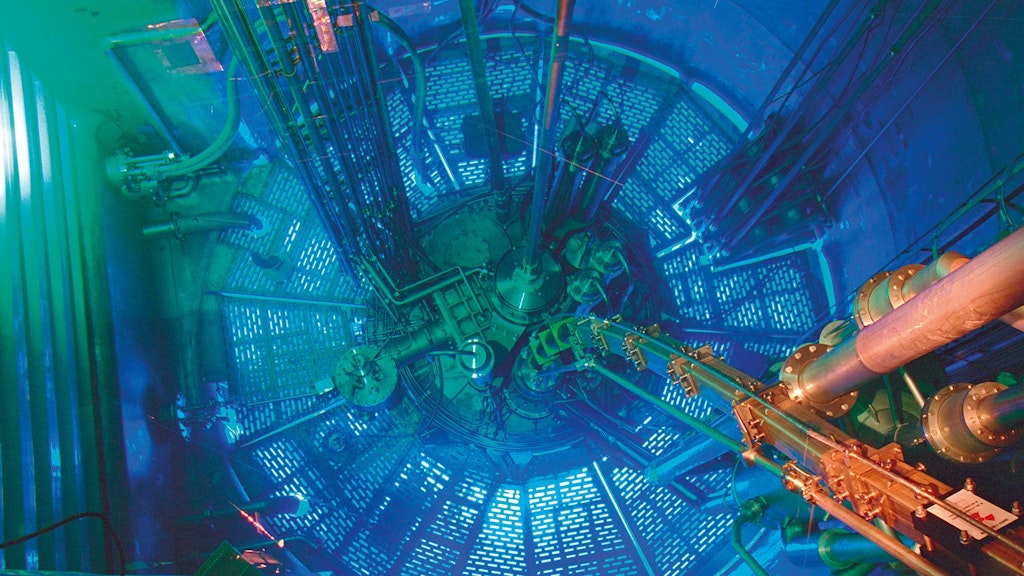
In Grenoble, the Institut Laue-Langevin (ILL) is expanding the frontiers of neutron science and technology. Thanks to the world's most powerful neutron source specifically designed for research, Swiss scientists are gaining new insights in fields as diverse as physics, chemistry, magnetism, materials science, energy, biology and medicine.
Tomorrow’s science
Commissioned in 1971, the high-flux reactor powers more than 40 state-of-the-art instruments. These exceptional infrastructures have allowed the ILL to establish itself as a world leader in neutron research. Every year, hundreds of scientists use these installations to conduct groundbreaking experiments in fundamental and applied research. The ILL is a key European research facility where scientists share ideas and techniques to shape tomorrow's science.
Swiss partnership
Switzerland’s scientific partnership with the ILL is based on a series of international treaties initially signed in 1988 and renewed for five-year periods. In 2024, Switzerland signed an agreement with the ILL to prolong its participation as a Scientific Member until 2033. Access to ILL infrastructures benefits the Swiss research community. At the same time, Swiss companies secure lucrative contracts from the ILL, facilitated by the liaison work done by Swiss ILO.
SERI is responsible for Swiss participation in the ILL.
Modernisation and innovation: Millenium and Endurance programmes
To maintain its global leadership position, the ILL has carried out two programmes to modernise its facilities. Launched in 2001, the ‘Millennium’ programme added 14 new instruments and boosted the performance of existing equipment tenfold. The second phase, ‘Endurance’, began in 2016 and will result in the modernisation or replacement of 30 instruments. This will ensure that the ILL remains at the forefront of technology.
A European-scale partnership
The founding members (‘Associate Countries’) of the ILL are Germany, France and the United Kingdom. Austria, Belgium, Denmark, Spain, Italy, Hungary, Poland, the Czech Republic, Switzerland and Sweden also take part in research for renewable five-year periods as ‘Scientific Members’. With around 500 employees and an annual budget of approximately EUR 102 million, the ILL operates as an infrastructure designed to host scientists from participating countries. Research time is allocated on a competitive basis: only researchers proposing the most noteworthy experiments are invited to Grenoble to carry out their work.
Index
State Secretariat for Education, Research and Innovation SERI
Patrice Soom