
Space: Swiss success stories
Switzerland's membership of ESA strengthens research and industry: research institutes and companies acquire cutting-edge expertise and make significant contributions to international space projects. A selection of Swiss success stories can be found on this page.
Marco Sieber – the new ESA astronaut from Switzerland
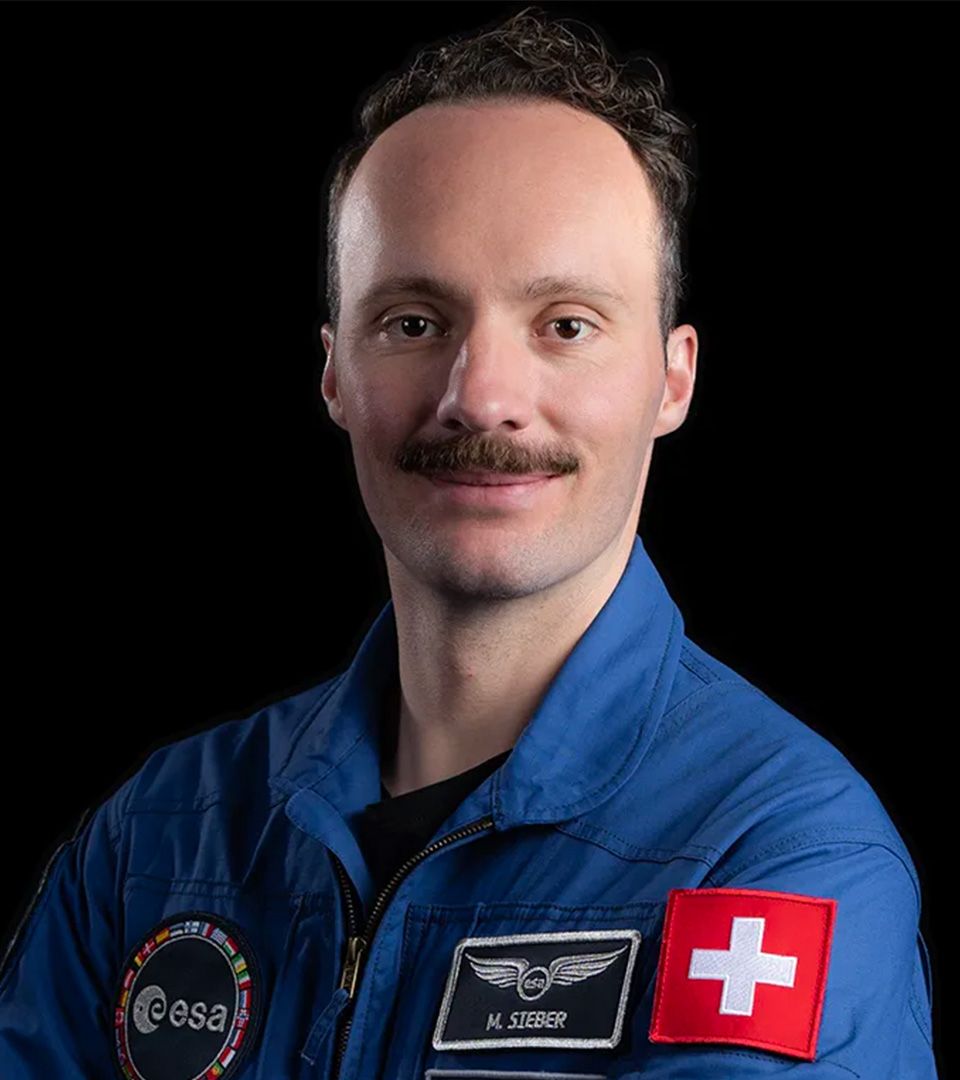
Following his selection in November 2022 and successful basic training, Marco Sieber was officially accepted into the ESA Astronaut Corps in April 2024. The new ESA astronauts are preparing for future missions to the International Space Station (ISS), the Moon or even further afield.
Claude Nicollier – Swiss ambassador in space
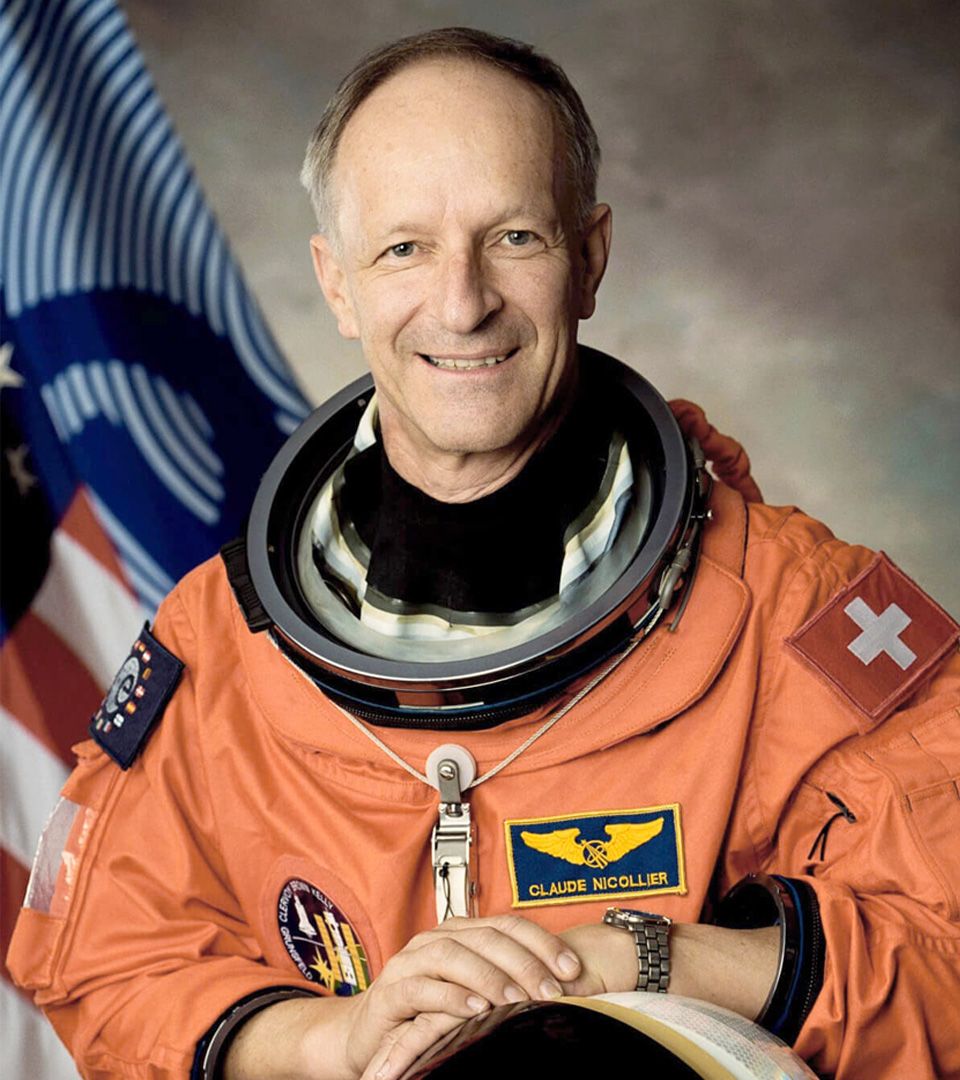
After being selected in 1978 and undergoing more than 12 years of training, Claude Nicollier flew into space for the first time on July 31, 1992, aboard the Space Shuttle Atlantis. He completed a total of four successful flights, including two to the Hubble Space Telescope. He is now a professor emeritus at ETH Lausanne.
Swiss technology for ESA's Ariane and Vega launchers
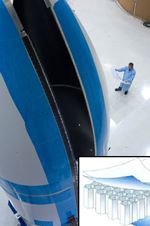
Beyond Gravity (formerly RUAG Space and Oerlikon Contraves) has been in the space business for more than forty years. As Switzerland's largest space company, it develops and manufactures structures and mechanisms, in particular composite payload fairings.
Beyond Gravity is the only European manufacturer of these components and supplies them for the ESA launch vehicles Ariane and Vega. This Swiss product has proven its reliability in all 260-plus Ariane launches to date. The Swiss fairings are also used on Ariane 6, Vega C, and the American Vulcan launch vehicle.
SwissCube-1 - Switzerland's first satellite
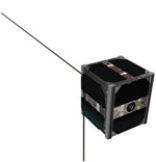
SwissCube-1 is the first satellite to be developed and built entirely in Switzerland. Measuring just 10 × 10 × 10 cm and weighing 1 kg, the CubeSat was developed under the direction of the Space Center at ETH Lausanne in collaboration with various Swiss universities (of applied sciences). On September 23, 2009, SwissCube-1 was successfully launched by an Indian launcher into orbit at an altitude of approximately 850 km to study the so-called “airglow” phenomenon in the upper layers of the atmosphere.
Swiss atomic clocks – Swiss precision in space
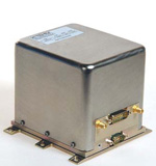
Rubidium technology developed in Switzerland enables the production of RAFS atomic clocks (RAFS: Rubidium Atomic Frequency Standard). These clocks are used as extremely accurate and stable timekeepers (mostly to measure signal travel time and thus distances). Their deviation is only about 0.0000000001 second per year. Swiss rubidium clocks have proven their reliability in space and are used in the operational satellites of the European navigation system Galileo.
Solar sail experiment on the lunar surface
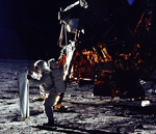
The first scientific experiment ever conducted by a manned mission on the moon originated in Switzerland. The solar wind sail, a piece of aluminum foil shaped like a sail, was deployed by the Apollo astronauts to capture particles from the solar wind. The solar wind is a stream of particles originating from the sun. Laboratory analyses of this sail, which was brought back to Earth, made it possible for the first time to directly determine the isotope ratios of the noble gases helium, neon, and argon in solar wind. These experiments were planned, carried out, and evaluated primarily at the Physics Institute of the University of Bern.
Lowering and elevation of terrain: the example of Venice
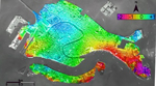
The illustration shows an impressive example of space-based Earth observation in action: radar interferometry can be used to measure land movements of just a few millimeters per year. Methods developed at the University of Zurich and commercialized by the Bern-based company Gamma Remote Sensing show that Venice is sinking by 1–2 mm per year (orange, red, purple) – but also rising by up to 1 mm (light blue).
Discover Switzerland's contributions to various space missions
State Secretariat for Education, Research and Innovation SERI
Swiss Space Office